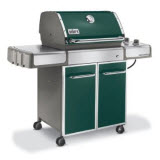
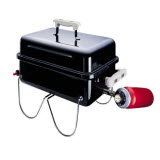
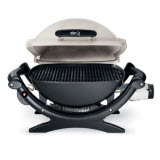
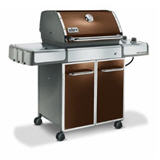
Weber Gas Grills
Gas-fueled grills typically use propane or
natural gas as their fuel source, with gas-flame either
cooking food directly or heating grilling elements which in turn radiate the heat necessary to cook
food.
Gas grills are available in sizes ranging from small, single steak
grills up to large, industrial sized
restaurant grills which are able to cook enough meat to feed a hundred or more people. Gas grills are designed for
either LP or NG, although it's possible to convert a grill from one gas source to
another.
Weber is the leading and trusted brand
when it comes to gas grills. They have been in business for more than 50 years and should always be on top of
you're list when shopping for a gas grill.
So, How Do You Shop for a Weber Gas
Grill and What Do You Look For?
In a
survey conducted by Weber, they talked to a lot of to grilling enthusiasts to ask them what they want in their
Weber gas grills. Frustrated by owning disappointing grills from other companies, they mostly came up with three
main things that they do not want:
1. Uncontrollable flare-ups.
2. Grills that fall apart after a couple of seasons.
3. Burnt food.
Most people blame burnt food on the chef. But most are surprised to learn
that it’s more likely the grill that's at fault. It’s a fact that not all grills cook equally. The design and
construction of a gas grill is a primary factor in how well it cooks. Choosing the right grill can mean the
difference between eating juicy steaks or charred cheeseburgers.
The ABC's of a Weber Gas
Grill:
A. On the top of every grill is the hood, which keeps heat from escaping.
B. The cookbox is the body of the grill and houses the cooking system, which consists of three primary
components:
* The cooking grates, where you place the food, come ?rst.
* Below is a heat dispersal system.
* At the bottom are the burners, which create heat.
C. Underneath the cookbox is some type of system to channel and collect grease.
After you figure out the ABC's, follow these Five-Steps before buying that Weber Gas Grill:
Step 1: GIVE IT THE WIGGLE TEST
Step right up, grab the grill by the sides, and give it a good shake. If it doesn’t feel sturdy at the store, you
can bet it’s going to fall apart in your backyard. A well-built Weber gas grill feels solid and stable, and is made
of high-grade U.S. steel, baked-on porcelain enamel and heavy-gauge stainless steel. The best grills have carts
that are welded, not screwed together, to make them sturdier.
How is the cart constructed ?
The more fasteners used to hold the frame of the cart together, the less durable the grill.
Why? Because fasteners have to stand-up to the weight of the grill and the stress caused by moving it around on
your patio. Look for a grill that has solid steel welded construction. The welds add strength to the cart and also
make it easier to assemble.
What about the metals?
It’s hard not to ooh and aah over a bright shiny grill, but don’t let good looks alone blind you. Check the
thickness of the metals. For stainless steel on a hood or trim pieces, you’ll want thicker gauge that will be long
wearing. Look for 304-grade. If it isn’t stated in the product information, ask a salesperson.
Will it move easily on your deck?
When is a wheel not
a wheel? When it breaks and can’t go round-and-around. Wheels may seem like an unimportant detail, but they’re not.
This is an area where many manufacturers cut corners. Check out the quality of casters and wheels. Casters should
be up to appliance standards. Wheels should be designed to survive extreme hot and cold temperatures so they don’t
crack or break.
What about the fit and finish?
Pay attention to the craftsmanship. Look for sharp edges—particularly on the hood and at hip and thigh level. Make
sure welds on the stainless steel are well polished. If you’re buying an enclosed cart, open and close the doors.
Are the latches durable, and the doors evenly aligned? Make sure the storage area is enclosed. Some manufacturers
leave the back of the grill exposed, which looks bad if the back side of your grill is showing on your deck or
patio.
Step 2: SEE WHAT IS
INSIDE
Lift up the hood. Most Weber gas grill shoppers stop at opening and closing the hood. If it feels heavy, they tend
to think the grill is good. But that’s like judging a car on the weight of the hood. Check what’s inside to really
judge how it will perform.
Are the grates durable?
Avoid nickel or chrome-plated steel because they can rust. Better grills use individually welded porcelain-enameled
steel, stainless steel, or porcelain-enameled cast-iron cooking grates. They also have rods that are the same width
as those found in the ?nest steak houses—perfect for searing.
What about the handle?
Imagine the grill is hot, then open the hood. Does the handle provide safe clearance for your arm and hand? Make
sure there is plenty of distance between the handle and the hood or the handle could conduct heat, potentially
making it a painful process to open your grill. Also, look for a heat and weather-resistant material like stainless
steel or glass-reinforced nylon.
How is the hood constructed?
When buying a Weber gas grill with a stainless steel hood make sure it’s double-walled. Double-walled hoods create
an insulated air space protecting the outer ?nish from discoloration. If you buy a grill with a single-walled hood
be sure it has a porcelain enameled ?nish so it lasts and won’t fade.
Step 3: LIFT OUT THE GRATES AND LOOK
INSIDE
Under the grates you’ll see some type of system to disperse heat from the burners and
channel away food drippings. Many grills use lava rocks or ceramic briquets. But beware—drippings can pool on these
surfaces until they reach a flash point and flare-up.The best design, such as those found on Weber gas grills, is
an inverted v-shaped metal bar (invented by Weber) that rests on top of the burners to vaporize drippings.
How good are the inverted v-shaped metal bars?
Because the inverted v-shaped metal bar system is so much better than lava rocks or ceramic briquets, many
manufacturers copy this design. But all designs are not equal. Look for precisely angled metal bars to facilitate
any run off of juices that aren’t vaporized when they hit the hot surfaces. Next, the bars should completely cover
the burners and should not have holes or cutouts in the metal. Cutouts compromise their ability to protect the
burners. Also, since liquid propane and natural gas contain trace elements of water, the bars should be made of
rust-resistant materials. Look for thick stainless steel or porcelain-enameled steel bars.
Where does the grease go?
Most people don’t think about where the grease collects when they’re buying a new Weber gas grill, but it’s
important. If drippings aren’t properly channeled away from the burners, they can cause ?are-ups or even worse, a
grease ?re in the bottom of your grill. Look for a system that funnels drippings down and away from the burners
into a high-capacity catch pan. Some manufacturers don’t even include a catch pan, instead they suggest you hang an
empty soup can underneath the grill to catch the drippings. Be sure to check it out. If the catch pan is shallow,
like a cookie sheet, it could over?ow onto your patio or deck. Also, look at where the catch pan is mounted. Can
you remove it and get to it without having to turn your grill around? Try taking it out and putting it back in a
few times. If it sticks it means it is poorly designed or may be warped.
Step 4: TAKE OUT THE STEEL BARS OR
BRIQUETS
Underneath, you’ll find the burners, which provide heat. Lower priced grills will have only one burner or burners
shaped like an H, a U, or a circle. These designs can create hot and cold spots across the grilling surface,
meaning steaks on one side of the grill will be fully cooked while those on the other side won’t be done, or worse,
overdone. Burner tubes on better grills, such as the Weber gas grill models, are independently controlled and run
the length of the cookbox to provide evenly dispersed heat.
What kind of burner system is provided?
The best grills have
at least two or more separately controlled burners, not just control knobs. Controls for each burner give you the
ability to grill by the Direct or Indirect method. The burners should be spaced to provide heat across the entire
cooking grate. Burner valves should have in?nite control settings, so you can ?netune the heat levels. If the knobs
are pre-set, only giving you the settings for low, medium, and high, you’ll be limited to those temperatures.
Burners should be made of high-grade stainless steel, which will stand up to the small amounts of water found in
liquid propane and natural gas.
What about knob instructions?
If the instructions are applied with stickers or are painted on they might fade or wear off. That will not only mar
the appearance of your grill, but leave you guessing about your heat settings. Better grills have instructions ?red
onto the paint ?nish, so they’ll never fade or scratch off.
What about BTUs?
The BTU rating doesn’t measure heat output. It’s actually a rating of how much gas your Weber gas grill can burn.
It’s like a car mileage rating. A gas guzzler will use more gas while a more ef? cient one uses less. A
well-designed grill actually conserves BTUs. Grills with 600 square inches of cooking space only need about 35,000
BTUs to reach a searing temperature of 550° to 600°. Generally,larger grills (four or more burners) require higher
BTUs.
Step 5: THINK ABOUT WHO MADE THE GRILL
Do you know and trust the name on the hood? Will they help you down the road? What happens if you have a question
when assembling your grill on a Saturday afternoon? Who can you talk to? Does the company have toll-free
round-the-clock service to help you when you need it? How about the extras that make your grilling experience
better, like detailed cooking instructions and free recipes?
What does the warranty cover?
Take a minute and read through the warranty. Is there a lot of ?ne print? Understand what is and isn’t covered or
you may end up paying extra for what you mistakenly thought was covered. Look for an uncomplicated and generous
warranty from a company with a dependable reputation.
Who built your grill?
Do you recognize the brand name? Ask if the grill is actually made by the company on the nameplate, you might think
it’s a quality product only to discover it’s a cheap import hiding behind a well-known name. Find out where it was
built, and how it was inspected before it left the factory.
What about customer service?
Will the company be around when you need grilling advice, assistance, or spare parts next year? Ten years from now?
Look for a grill with a 24-hour hotline that lets you talk to a real person—not a machine. In fact, while you’re
shopping, pick up the phone and call the customer service department. It’s a good test of how you’ll be treated
after the sale.
Ask your friends and family! The strongest proof of a quality product is
whether or not those who own one are happy with their purchase. Ask your neighbors and friends or look at online
reviews. It’s the best way to gauge how happy you’ll be with your grill after you get it home.
There you have it, the basic steps to follow when shopping for your Weber gas grill !
Click Here for the Gas Grills
Center
|